
أبحاث سوق الطاقة العالمية: حلول فائقة الأهمية لمستقبل الطاقة لدينا
The energy demands of a growing world never cease. Unfortunately, past ways of providing power, particularly coal, are becoming less viable due to increased regulation centered on environmental concerns and human health protection. The coal plants of the past are entering obsolescence as the world turns to shale gas extraction and clean power sources such as solar, wind, and geothermal to meet the global energy needs of tomorrow. Combined cycle technologies are replacing coal-fired plants, creating profitable markets for gas and steam turbines. Meanwhile, we improve existing technologies and uncover new and exciting ways of providing the power sources that will energize the 21شارع قرن.
هل الفحم ميت؟ بعيد عنه. إن الصين والهند وغيرها من المناطق الناشئة تحتاج إلى الفحم الاقتصادي لتعزيز وتيرة التنمية السريعة لديها، كما أن تكنولوجيات الفحم النظيفة الجديدة قادرة على توفير الطاقة بشكل أكثر كفاءة وبتأثير أقل على البيئة. وقد أدى انتشار محطات CCGT وعودة إنتاج الطاقة النووية، بعد فوكوشيما، إلى خلق طلب متزايد على التوربينات التي تعمل بالبخار والغاز. تحليل جديد من فروست آند سوليفان، أسواق توربينات الغاز والبخار العالمية, finds that the market earned revenues of $32.51 billion in 2013 and estimates this to reach $43.49 billion in 2020.1 Renewables are the wave of the future, but energy sources such as wind and solar are as yet incapable of delivering the amount of electricity needed by an energy-hungry world.
In this report SIS International Research endeavors to uncover evolving energy trends from a power equipment manufacturer’s point-of-view, particularly with regards to coal consumption. We’ll examine global micro-trends related to supercritical, ultra super critical and advanced super critical steam generators. We’ll also factor in climate change, industrial consolidation, and government policies on the evolution of the energy equipment industry. Our C.I Team recently held in-depth discussions with many key figures inside the power industry to gauge their views on our global energy future as they see it.
ما هي العوامل التي تؤثر على صناعة الطاقة أكثر؟
لقد انخفض عصر توليد الطاقة باستخدام الفحم بشكل مطرد في السنوات الأخيرة. في الماضي، كان الفحم يمثل ما يقرب من 55% من سوق الولايات المتحدة. واليوم قد يكون هذا الرقم أقل من 45%. كان للأنظمة الجديدة المتعلقة بانبعاثات ثاني أكسيد الكربون وحرق الوقود الأحفوري تأثير واضح على صناعة الفحم، وأصبحت بعض محطات الفحم مكلفة للغاية بحيث لا يمكن تشغيلها. في يونيو من عام 2014، وضعت وكالة حماية البيئة خطة للطاقة النظيفة تهدف إلى "الحفاظ على نظام طاقة موثوق وبأسعار معقولة، مع خفض التلوث وحماية صحتنا وبيئتنا". 2 The Clean Power Plan mandates that plants that burn fossil fuels must cut their carbon emissions by 30% in an attempt to slow climate change. Opponents of the plan fear that it could ultimately lead to job layoffs and plant closures.
Utilities today are questioning the comparative value of retrofitting older plants with expensive air-quality control systems to keep them compliant, versus installing new gas-fired combined cycle plants. They are finding that the old plants are not cost-competitive when the price of natural gas is $2 to $3 per million BTU. Uncertainty about regulations and the future direction of energy consumption has created ambivalence in the energy sector, especially with President Obama being particularly vocal about the downside of coal. Some in the industry feel power providers will wait to see who takes the White House in 2016 before they make plans or continue changing the way they generate power.
Still others feel a broader paradigm shift will need to occur, possibly related to electric vehicles and the energy demand they would create for lithium-ion production or hydrogen cell manufacturing. Ultimately, momentum is swinging away from oil and gas-powered cars. It is a slow transition because gasoline, despite its environmental liabilities, has been a tremendously useful transportation fuel.
Supercritical Solutions Global Energy Future: How Industrial Leaders Are Capturing the Next Power Cycle
Supercritical solutions global energy future positioning now defines which industrial players will lead the next twenty-year power cycle. The shift is technical, capital-intensive, and already underway. Operators evaluating supercritical CO₂ turbines, advanced steam cycles, and integrated long-duration storage are sequencing investments that will compound for decades.
The opportunity is concrete. Supercritical CO₂ (sCO₂) power cycles operate at thermal efficiencies materially above conventional steam Rankine cycles, with footprints roughly one-tenth the size of equivalent steam turbines. That changes siting economics, capital intensity, and the entire levelized cost of energy curve for thermal generation, concentrated solar, nuclear repowering, and waste heat recovery.
Why Supercritical Cycles Are Reshaping Generation Economics
The thermodynamic case is settled. Operating CO₂ above its critical point (roughly 31°C and 74 bar) produces a working fluid with liquid-like density and gas-like compressibility. Compression work drops sharply. Turbine inlet temperatures climb. The result is a power block that converts more heat to electricity per unit of fuel, sorbent, or solar flux.
The commercial case is now catching up. The U.S. Department of Energy’s STEP Demo facility in San Antonio validated a 10 MWe sCO₂ pilot. GTI Energy, Southwest Research Institute, and GE Vernova have each advanced component qualification. Siemens Energy, Doosan Škoda Power, Toshiba, MHI, and Echogen Power Systems are positioning across utility-scale, industrial waste heat, and modular nuclear segments. The technology is moving from demonstration to first commercial deployment, which is where positioning decisions matter most.
For VPs of strategy and corporate development, the question is not whether sCO₂ will be deployed. It is which applications scale first, which geographies absorb early units, and which partnerships lock in supply chains for high-temperature alloys, turbomachinery, and printed circuit heat exchangers.
The Three Deployment Pathways Driving Early Commercialization
Three application pathways are absorbing early sCO₂ capacity, and each carries a distinct competitive logic.
Industrial waste heat recovery is the fastest-moving segment. Steel mills, glass furnaces, cement kilns, and gas turbine exhaust streams produce continuous high-grade heat that sCO₂ blocks convert efficiently at scales between 7 and 50 MWe. Capacity factor optimization is straightforward because the host process runs continuously. Payback periods compress when carbon pricing or border adjustment mechanisms enter the calculation.
Concentrated solar power (CSP) repowering and greenfield is the second pathway. Higher turbine inlet temperatures unlock storage at 700°C molten salt or particle media, raising round-trip efficiency for thermal storage above what lithium-ion can deliver at multi-day durations. Spain, Chile, the UAE, and Saudi Arabia are the active markets. The grid interconnection queue in MENA favors developers who can demonstrate firm dispatchable renewable output, which sCO₂-coupled CSP can.
Advanced and small modular reactors are the long-cycle pathway. Sodium-cooled, molten salt, and high-temperature gas-cooled reactor designs from TerraPower, X-energy, and Kairos Power are pairing with sCO₂ power conversion to reduce plant footprint and capital cost per kilowatt. The deployment timeline is longer, but the supply chain commitments are being made now.
According to SIS International Research, B2B expert interviews with senior power generation strategists across North America, Germany, Brazil, the UAE, and Saudi Arabia indicate that early sCO₂ commercialization will concentrate in industrial waste heat and CSP-coupled storage before utility-scale baseload, primarily because host-process integration shortens permitting timelines and de-risks first-of-a-kind capital exposure.
What Leading Firms Are Doing Differently
The conventional approach treats sCO₂ as a future technology bet, monitored through trade press and conference attendance. The leading approach treats it as an active competitive intelligence priority with three workstreams running in parallel.
First, structured supplier qualification across the high-temperature alloy chain. Haynes 282, Inconel 740H, and similar nickel-based superalloys are the bottleneck. Firms locking in offtake agreements with mills in Germany, Japan, and the U.S. are positioning for delivery slots that will be constrained once first commercial orders land.
Second, customer-side voice of customer programs targeting utility planners, IPP developers, and industrial energy managers. The buying criteria for sCO₂ are still being formed. The firms shaping those criteria, through technical white papers, joint development agreements, and standards body participation, will define the procurement specifications competitors must meet.
Third, regulatory mapping across permitting regimes. CO₂ working fluid is non-toxic and non-flammable, but containment standards, ASME Section VIII pressure vessel codes, and grid interconnection requirements vary by jurisdiction. Early engagement with FERC, ENTSO-E, and Gulf Cooperation Council regulators reduces approval timelines by quarters, not weeks.
SIS International’s competitive intelligence work in the energy transition sector indicates that the firms gaining early share in adjacent technologies, hydrogen electrolyzers, long-duration battery storage, carbon capture, did so by funding independent market studies before product launch, not after. The same pattern is now visible in supercritical cycles.
The Geographic Sequence of Adoption
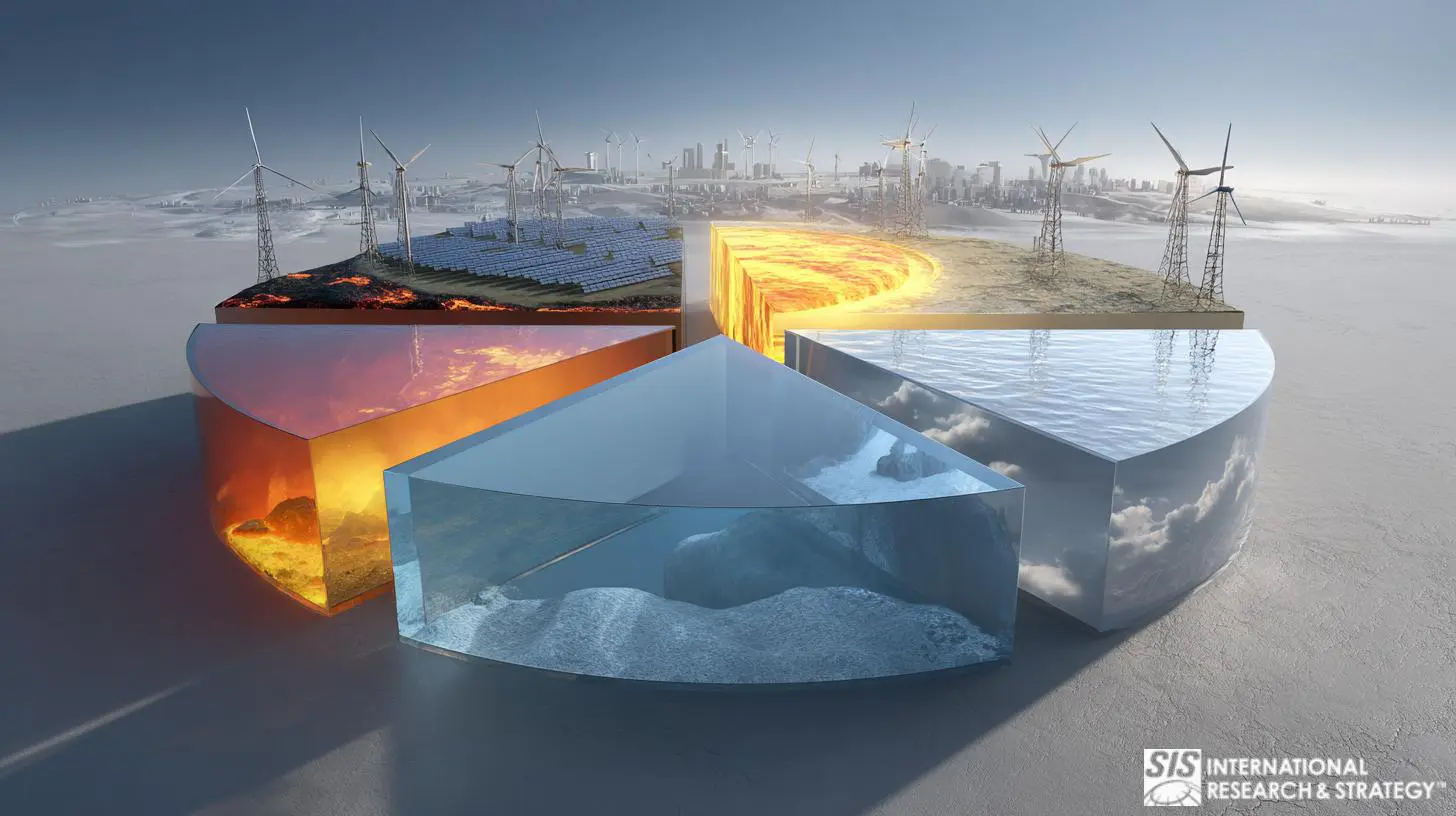
Adoption will not be uniform. Capital availability, industrial heat demand, and policy alignment determine sequence.
| Region | Lead Application | Primary Driver |
|---|---|---|
| أمريكا الشمالية | Industrial waste heat, SMR coupling | IRA tax credits, data center load growth |
| Germany & Northern Europe | Combined heat and power retrofit | Industrial decarbonization mandates |
| UAE & Saudi Arabia | CSP with thermal storage | Sovereign clean energy targets, solar resource |
| البرازيل | Sugarcane bagasse cogeneration | Biomass feedstock economics |
| Japan & South Korea | Advanced reactor power conversion | Energy security, technology export strategy |
Source: SIS International Research, synthesized from B2B expert interviews and competitive intelligence engagements in energy and industrial sectors.
Each market rewards a different go-to-market posture. North American developers compete on speed to first commercial unit. European players compete on integration with existing district heating and CHP assets. Gulf state buyers prioritize local content commitments and technology transfer. Brazilian projects hinge on agribusiness partnerships. Japanese and Korean firms are building export platforms tied to advanced reactor exports.
The SIS Framework: Four Variables That Determine Early-Mover Advantage
SIS International’s market entry assessments in the energy transition sector consistently surface four variables that separate winners from late entrants in technology cycles of this scale.
Reference plant economics. The first three commercial units set the cost benchmark every subsequent buyer references. Firms that subsidize early deployments to lock in favorable LCOE numbers control the narrative for a decade.
Standards body participation. ASME, IEC, and ISO working groups are writing the codes now. Voting members shape acceptable materials, testing protocols, and inspection regimes.
Service and aftermarket positioning. sCO₂ turbomachinery operates at conditions that demand specialized maintenance. The aftermarket revenue strategy locked in at sale time often exceeds the original equipment margin over a 25-year asset life.
Capital partner alignment. Infrastructure funds, sovereign wealth vehicles, and export credit agencies are the patient capital sources that finance first-of-a-kind plants. Firms with pre-arranged financing structures close deals faster than competitors negotiating capital alongside technical scope.
Where the Intelligence Gap Lies
Public reports cover the technology. They do not cover what utility planners actually intend to procure, what industrial buyers will pay for waste heat conversion, or which regulators are inclined to fast-track permits. That intelligence comes from primary research with the people making the decisions.
SIS International has conducted market entry assessments, B2B expert interviews, and competitive intelligence programs across power generation, oil and gas, and industrial energy for over four decades, in the geographies where sCO₂ deployment is concentrating. The supercritical solutions global energy future is being shaped right now by the firms commissioning that primary research and acting on it before the rest of the market catches up.
حول سيس الدولية
سيس الدولية يقدم البحوث الكمية والنوعية والاستراتيجية. نحن نقدم البيانات والأدوات والاستراتيجيات والتقارير والرؤى لاتخاذ القرار. نقوم أيضًا بإجراء المقابلات والدراسات الاستقصائية ومجموعات التركيز وغيرها من أساليب وأساليب أبحاث السوق. اتصل بنا لمشروع أبحاث السوق القادم.

 AR
AR  EN
EN  ZH
ZH  ZH_HK
ZH_HK  NL
NL  FR
FR  DE
DE  IT
IT  JA
JA  KO
KO  PL
PL  PT
PT  ES
ES