
Hoe je een focusgroep organiseert
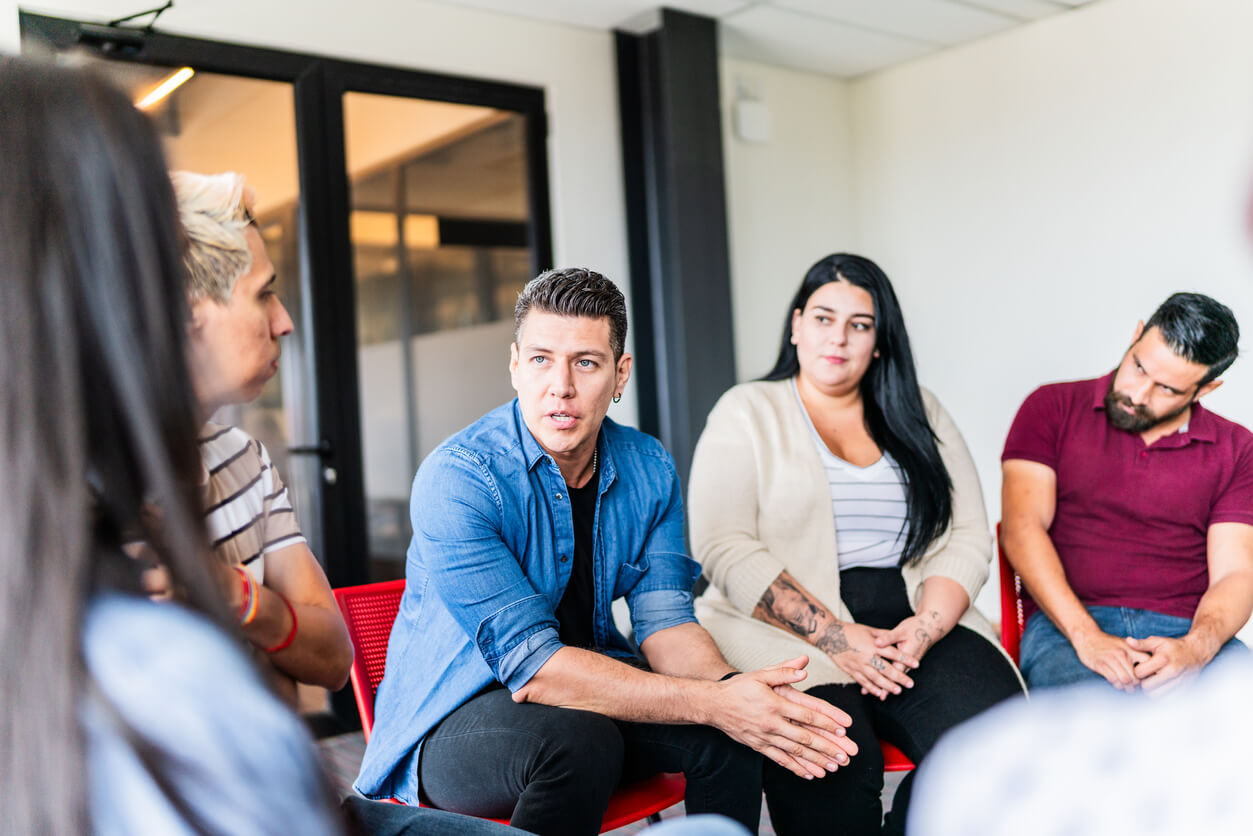
Simply stated, a Focus group is usually a group of between 6 and 12 individuals with similar demographics (e.g., car buyers, diabetes patients, new mothers) who are brought together to discuss a “focused” topic.
Have you ever wondered how to extract actionable insights directly from your target audience? At SIS International, we’ve seen firsthand how focus groups can be a game-changer in understanding the true sentiments and motivations behind consumer behavior.
As a CEO, I’ve had the privilege of working with major global brands including Samsung, Johnson & Johnson and Kraft Heinz, and can tell you that conducting a properly structured focus group is frequently what unlocks deep, meaningful insights. We’ve run focus groups for clients in many industries at SIS International—from healthcare to consumer goods—and we know firsthand how they reveal actionable insights that would otherwise remain dormant.
How to Conduct a Focus Group That Drives B2B Industrial Decisions
A focus group is a structured qualitative session where six to ten participants discuss a defined topic under a trained moderator. In B2B industrial markets, the format reveals the procurement logic, technical objections, and switching triggers that surveys rarely surface.
The question is not whether to run them. The question is how to conduct a focus group that produces decision-grade intelligence on capital equipment, supplier qualification audits, or aftermarket revenue strategy. The mechanics matter. So does the discipline behind them.
Defining the Decision Before You Recruit
The strongest focus groups begin with a single sentence: what decision will this research inform. A new pricing tier for a connected machinery platform requires a different participant mix than a bill of materials optimization study or an installed base retention program.
VP-level sponsors who anchor the discussion guide to a named decision get sharper output. Vague objectives produce vague transcripts. When the brief specifies the trade-off (margin versus share, in-source versus outsource, premium versus value tier), the moderator can press participants on the actual hinge points.
SIS International Research has observed across industrial engagements in North America, Germany, and Japan that the highest-yield focus groups are scoped to one decision and one buying-center role. Mixing plant managers with C-suite procurement in the same room compresses both perspectives and surfaces neither.
Recruiting the Right Buying Center
B2B industrial buying centers typically include the technical evaluator, the economic buyer, the end user, and the procurement gatekeeper. Each has a different lens on total cost of ownership, supplier qualification, and switching risk. A focus group that blends them produces polite consensus. A focus group segmented by role produces candor.
Recruitment screeners should test for three things: decision authority on a comparable purchase within the past 18 months, working knowledge of the category vocabulary, and willingness to challenge peers. Honoraria for industrial participants run materially higher than consumer studies because the opportunity cost of a plant engineer or sourcing director is real.
Named examples illustrate the discipline. When Caterpillar refreshes dealer network strategy, when Siemens evaluates a new digital twin module, when Honeywell pressure-tests a process safety upgrade, the recruit is built around verified buyers in active evaluation cycles, not opinion holders.
Designing a Discussion Guide That Reveals Mechanism
A good guide moves from broad to specific in three acts. Act one establishes the participant’s current state: installed base, vendor roster, recent procurement cycle. Act two probes the friction: what slowed the last purchase, what would have accelerated it, where the published spec sheet diverged from field reality. Act three tests stimulus: pricing structures, feature bundles, service-level commitments.
The mistake that dilutes industrial focus groups is overloading act three with concept boards. Three stimuli per session is the practical ceiling. Beyond that, fatigue sets in and feedback flattens into directional preference rather than reasoned trade-off.
Based on SIS International’s analysis of focus group programs across heavy equipment, industrial automation, and specialty chemicals, sessions that allocate 40 percent of the time to current-state diagnosis outperform those that rush to stimulus. The diagnosis half is where switching triggers and unmet needs surface.
Moderation Technique for Technical Audiences
Industrial participants test moderators. They use jargon to gauge whether the facilitator can keep up. A moderator who confuses MTBF with MTTR, or who cannot distinguish OPEX from CAPEX framing, loses the room within ten minutes. Participants stop volunteering and the transcript thins.
The technique that works is calibrated ignorance. The moderator demonstrates fluency in the category, then strategically asks participants to explain their reasoning to a peer in the room. This produces the verbatim a CFO can read: not “we chose vendor X” but “we chose vendor X because their service-level agreement covered second-shift response and the alternative penalized us on uptime guarantees.”
Hybrid and In-Person Format Selection
In-person sessions remain superior for product handling, prototype review, and competitive teardown exercises. Hybrid platforms now serve well for geographically distributed buying centers, particularly when participants span multiple plants or international subsidiaries. The choice is driven by what the stimulus requires, not by convenience.
Translating Output into Strategic Action
Transcripts are raw material. The deliverable a VP can act on is a synthesis that connects verbatim evidence to the decision the research was commissioned to inform. Three artifacts carry the weight: a switching-trigger map, a buying-center objection matrix, and a feature-to-willingness-to-pay linkage.
| Output Artifact | Decision Informed | Typical Source |
|---|---|---|
| Switching-trigger map | Competitive displacement strategy | Act one diagnosis |
| Objection matrix by role | Sales enablement, pricing | Cross-segment comparison |
| Feature-to-WTP linkage | Product roadmap prioritization | Act three stimulus testing |
| Vendor perception ladder | Brand positioning | Unprompted mentions |
Source: SIS International Research
SIS International’s proprietary research in industrial categories indicates that focus group programs paired with follow-on B2B expert interviews produce sharper segmentation than either method run alone. The focus group surfaces the language; the expert interview pressure-tests whether the language scales across the buyer population.
The SIS Approach to B2B Industrial Focus Groups

SIS International Research has conducted focus groups across 135 countries for over four decades, integrating them with ethnographic research, competitive intelligence, and voice-of-customer programs. In industrial work, the team typically pairs focus groups with site visits and structured expert interviews so that what participants say in the room can be triangulated against what they do on the floor.
Knowing how to conduct a focus group is the entry-level competency. Knowing which decisions warrant one, which warrant a paired methodology, and which warrant something else entirely is the differentiator. The firms that get repeat value from qualitative research treat the focus group as one instrument in a portfolio, not as a default.
The SIS Focus Group Decision Framework

A simple test before commissioning the work:
- Decision specificity: Can the sponsor name the decision in one sentence?
- Audience accessibility: Can the buying-center role be recruited at scale?
- Stimulus readiness: Is there concrete material to react to, or only abstractions?
- Triangulation plan: What second method will validate the qualitative signal?
When all four answer yes, the focus group will produce intelligence worth the investment. When two or fewer answer yes, the brief needs sharpening before recruitment begins.
Key Questions

Over SIS Internationaal
SIS Internationaal biedt kwantitatief, kwalitatief en strategisch onderzoek. Wij bieden data, tools, strategieën, rapporten en inzichten voor besluitvorming. Wij voeren ook interviews, enquêtes, focusgroepen en andere marktonderzoeksmethoden en -benaderingen uit. Neem contact met ons op voor uw volgende marktonderzoeksproject.

 NL
NL  EN
EN  AR
AR  ZH
ZH  ZH_HK
ZH_HK  FR
FR  DE
DE  IT
IT  JA
JA  KO
KO  PL
PL  PT
PT  ES
ES