
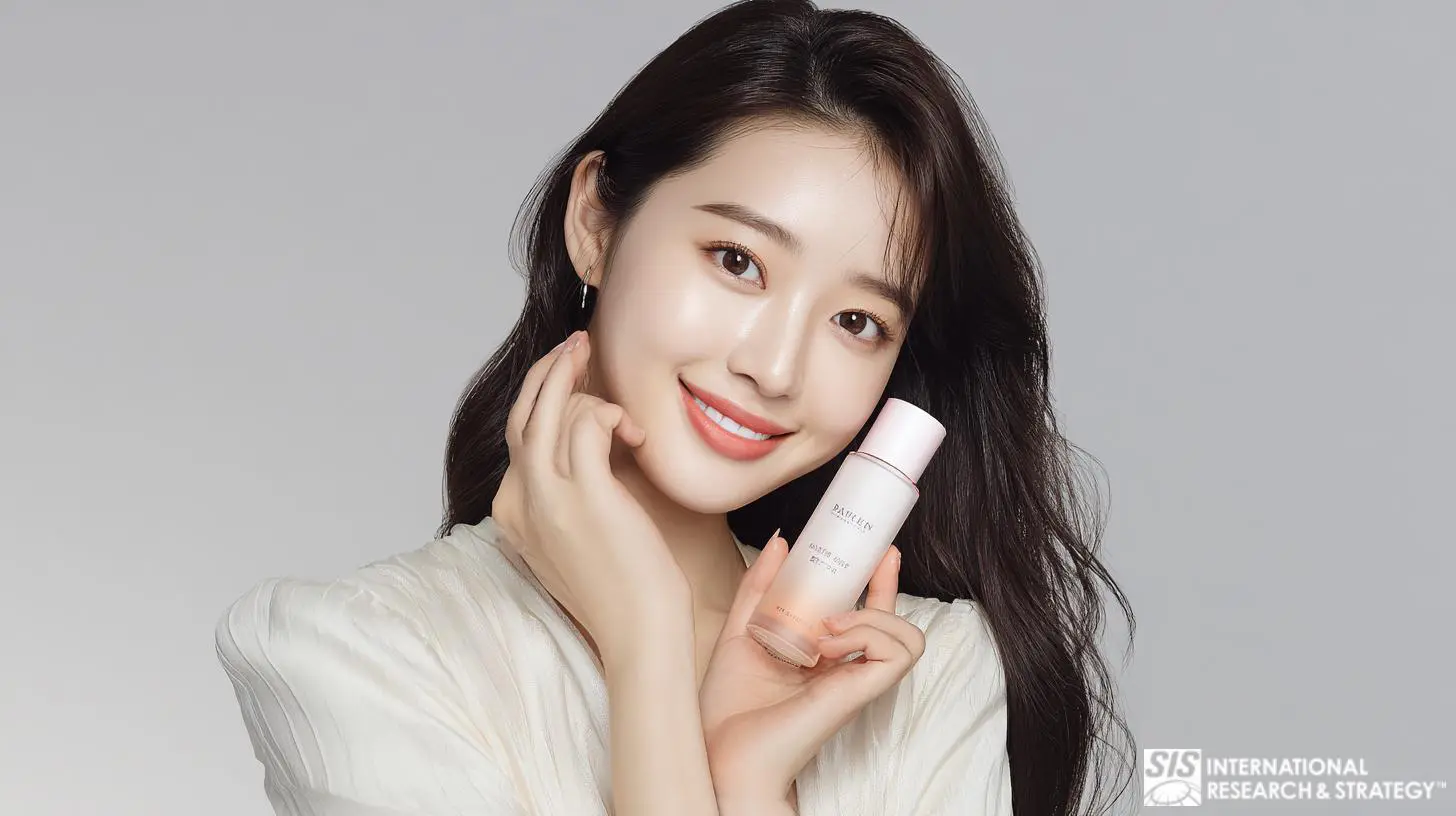
Beauty Product Market Research: How Leading Brands Win Category Share
Beauty product market research has shifted from descriptive reporting to decision intelligence. The brands gaining share are using it to sequence launches, calibrate price ladders, and validate efficacy claims before retail commitments lock in.
The category rewards precision. Shelf space at Sephora, Ulta, and Boots is finite. Tmall Global and Douyin reward velocity within the first 90 days. A skincare SKU that misses its concept-product fit window rarely recovers shelf or feed placement. The research that informs these decisions has to be sharper than the marketing that follows.
Why Beauty Product Market Research Now Drives Capital Allocation
Beauty CFOs treat research as a gating function for capital. Indication prioritization, formulation investment, and channel sequencing depend on evidence that survives commercial review. The conventional approach, syndicated category reports plus a concept test, produces consensus answers. Consensus answers do not win shelf.
The better alternative pairs ethnographic research with quantitative concept-product fit testing and competitive intelligence on dermatologist-recommended brands. CeraVe built dermatologist endorsement into its assortment architecture before scaling. The Ordinary anchored its price ladder against legacy serums priced ten times higher and used ingredient transparency as the wedge. Both companies validated positioning through structured consumer work before media spend.
According to SIS International Research across skincare engagements in the US, China, and Korea, the strongest predictor of launch success is not concept appeal but the gap between stated efficacy expectation and perceived benefit at first use. Brands that close that gap through reformulation before launch outperform those that close it through claims language.
Competitive Intelligence Beyond the Pricing Grid
Most competitive landscape analysis in beauty stops at SKU pricing and ingredient decks. That misses where margin is actually made. Acquiring brands like L’Oréal, Estée Lauder, and Shiseido evaluate targets on three less-visible dimensions: repeat purchase velocity, founder-led content equity, and formulator concentration risk.
Repeat purchase velocity inside DTC subscription cohorts predicts twelve-month revenue better than trailing sales. Founder-led content equity, the share of brand reach tied to a single creator, signals roll-off risk after acquisition. Formulator concentration matters because most prestige skincare brands rely on three to five contract manufacturers in South Korea, France, or Italy, and those formulators often supply competitors with adjacent formulas.
Competitive intelligence that surfaces these dimensions changes the bid. It also changes the integration plan. Beauty product market research conducted at this depth requires primary work with formulators, retail buyers, and dermatology KOLs, not panel surveys.
The Asia Beauty Opportunity Requires Local Sensory Calibration
Asia rewards brands that calibrate product to local skin physiology and ritual. Western anti-aging formulas often underperform in China and Korea because consumers benchmark against essence-first regimens with twelve-step sensorial cues. A product positioned as a serum in New York reads as undifferentiated in Shanghai if the texture, finish, and application step are wrong.
SIS International jest firmą międzynarodową. central location testing and sensory descriptive analysis across luxury skincare launches in China found that brightening efficacy perception correlates more tightly with finish (described locally as “moist but not sticky”) than with measured biomarker change over eight weeks. Brands that reformulated to local sensory expectations captured premium price points held by SK-II and La Mer. Brands that relied on Western consumer panels for Asia launches priced into a gap the consumer did not recognize.
The implication for capital allocation is direct. Asia launches need local hedonic scaling, JAR (just-about-right) analysis on texture and scent, and concept-product fit testing run in-market. Translated US studies do not substitute.
The Channel Economics Have Inverted
For a decade, DTC was the growth engine and retail was the cost. That has inverted. Customer acquisition cost on Meta and TikTok now requires repeat purchase economics most beauty brands cannot deliver in year one. Sephora, Ulta, Boots, and Mecca have become the efficient acquisition layer, with DTC repositioned as the retention and data layer.
This changes what beauty product market research has to answer. Retailer buyer interviews, planogram benchmarking, and shopper journey analytics inside Sephora and Ulta now matter more than incremental DTC funnel optimization. Trade spend modeling against retailer co-op programs determines whether a brand lands above or below eye level. The brands winning this cycle, including Rare Beauty and Glow Recipe, treat retail buyer relationships as a research input, not a sales output.
An Evidence Stack That Holds Up to Investment Committee Review
Beauty programs that get funded inside Fortune 500 companies share a research pattern. They layer evidence rather than relying on a single methodology.
| Decision Stage | Method | Output That Moves Capital |
|---|---|---|
| Opportunity sizing | Desk research, retailer scan, competitive landscape | Whitespace map by price tier and benefit claim |
| Concept validation | Focus groups, ethnographic research | Stated benefit versus latent benefit gap |
| Product calibration | CLT, sensory descriptive analysis, JAR scaling | Texture, finish, scent fit by region |
| Launch readiness | Quantitative concept-product fit, KOL mapping | Predicted repeat purchase and endorsement path |
| Post-launch optimization | VOC programs, retailer buyer interviews | Assortment and trade spend reallocation |
Source: SIS International Research
Based on SIS International’s analysis of beauty engagements across the US, Asia, and EMEA, the brands that move from concept to scale fastest are those that run sensory calibration and KOL mapping in parallel rather than sequentially. The compression of these two streams cuts launch timelines by months and reduces formulation rework.
Where the Next Share Gains Will Come From
Three structural shifts are creating opportunity for brands willing to invest in primary research. Clinical-grade actives are moving from prestige to masstige, opening a price tier between Neutrogena and SkinCeuticals that is currently underserved. Male skincare, long dismissed as a niche, is showing repeat purchase patterns in Korea and the Gulf that mirror female skincare a decade ago. And dermocosmetics, the pharmacy-led category dominated by La Roche-Posay and Avène, is migrating into mainstream US retail with shelf space already being reset.
Each of these shifts rewards brands that validate positioning through primary work. Beauty product market research is no longer a confirmatory exercise. It is the gating decision between a launch that earns shelf and a launch that loses it.
SIS International Research has supported beauty and skincare clients across more than four decades, running focus groups, ethnographic studies, sensory testing, and competitive intelligence programs in over thirty markets. The work is built for committee review and capital decisions.
O firmie SIS International
SIS Międzynarodowy oferuje badania ilościowe, jakościowe i strategiczne. Dostarczamy dane, narzędzia, strategie, raporty i spostrzeżenia do podejmowania decyzji. Prowadzimy również wywiady, ankiety, grupy fokusowe i inne metody i podejścia do badań rynku. Skontaktuj się z nami dla Twojego kolejnego projektu badania rynku.

 PL
PL  EN
EN  AR
AR  ZH
ZH  ZH_HK
ZH_HK  NL
NL  FR
FR  DE
DE  IT
IT  JA
JA  KO
KO  PT
PT  ES
ES