

View Our Case Studies

Supply chain consultancy: New challenges and trends
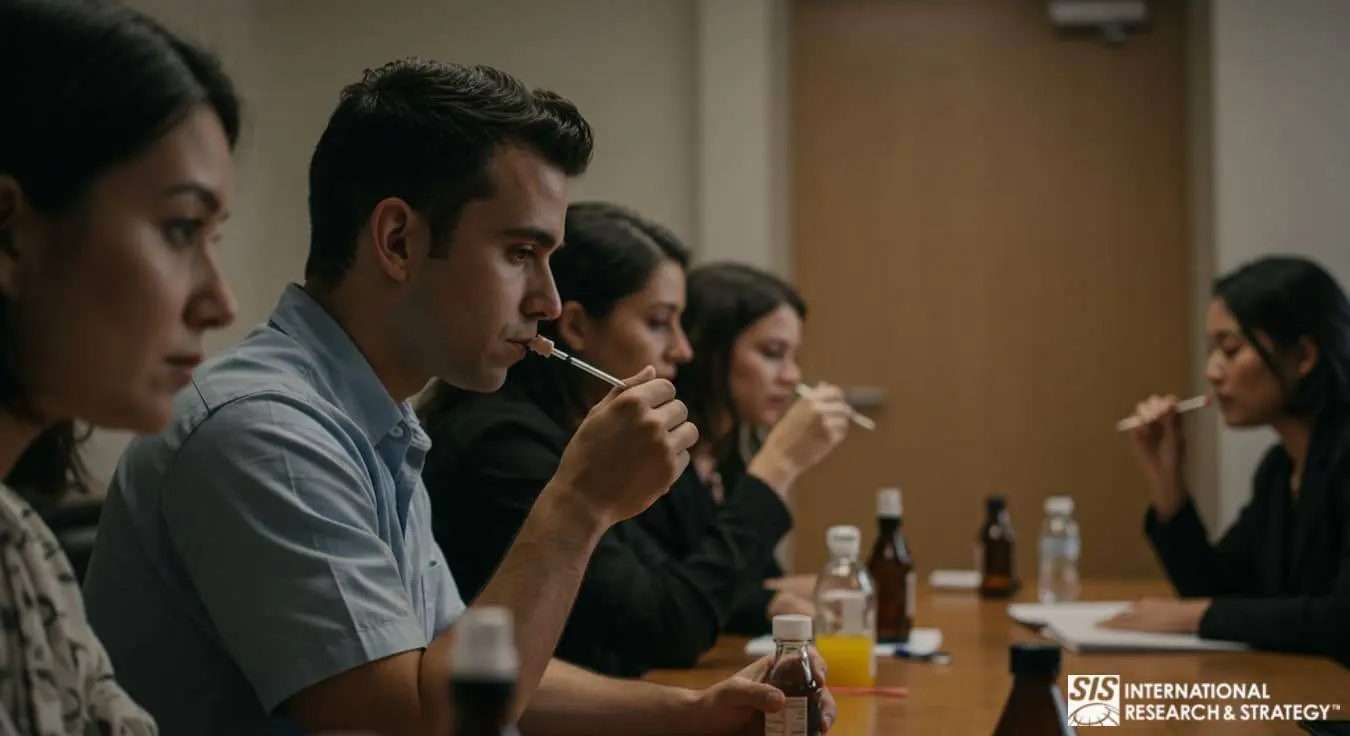
Food Taste Testing: Methods, Markets, and Best Practices

Navigating AI disruption with an AI Market Research Agency

Fintech Consulting for Banks: How Payments Are Changing
The Future of Advertising Research: Making Sense of a Rich Yet Complex Picture

Rebranding: Two CPG Brands with Two Outcomes

Focus Group Research: Key Benefits and Advantages

B2B Market Research Firm ROI for Smarter Growth

Case-Driven Insights for High-Impact Global Market Expansion
Which Industries Are Supported by SIS International?
SIS International delivers tailored market intelligence and strategic consulting across diverse global sectors worldwide.
Which Industries Are Supported by SIS International?
SIS International delivers tailored market intelligence and strategic consulting across diverse global sectors worldwide.
- Food & Beverage
- Hospitality
- Personal Care
- Travel & Tourism
- Retail
- Automotive
- B2B Services
- Non-Profit
- Legal Services
How Do Fortune 500 Companies Get Market Research That Drives Revenue?
Leading companies partner with SIS International Research for data-driven growth. We bring over 40 years of global market research and strategy consulting experience.
Headquartered in NYC with global offices, we deliver deep insights into international markets. We examine consumer patterns and motivations to drive measurable growth and innovation.

Why Partner with an International Market Research & Strategy Firm?
Partnering with a global research firm reduces expansion risks. We provide verified market intelligence, localized data, and strategic clarity for high-ROI decisions.

How Does Consumer Market Research Drive Growth?
Accelerate consumer understanding with our Consumer Market Research. Gain a competitive edge with up-to-date consumer data and actionable insights. We build effective strategies that drive long-term business success.
How Does B2B Market Research Empower Business Decisions?
Grow faster with our unique B2B expertise. We deliver deep market insights, key trends, and competitive strategies. Our B2B research empowers your leadership team to turn data into real revenue.

How Does Healthcare Market Research Help Companies Outperform Competitors?
Get actionable insights to lead the healthcare industry. We identify unexplored market opportunities across healthcare so your organization can innovate faster and outperform competitors.
Why Choose a Market Research Firm with a Proven Track Record?
SIS International delivers verified market insights and custom methodologies. With decades of experience partnering with Fortune 500 leaders, we provide project management you can trust.
We deliver data and strategic guidance tailored to your unique business needs. Our dedicated team utilizes cutting-edge methodologies and advanced analytics. We uncover the critical trends, behaviors, and opportunities that matter most to your business. We deliver around-the-clock project management essential in a 24/7 global economy.
Over the past four decades, we have partnered with industry leaders like Apple, Pfizer, Samsung, BMW, and Coca-Cola.
About US
What Makes SIS International Special in Global B2B Research?
Our primary strengths are a global reach across 135+ countries and four decades of specialized B2B expertise. We help businesses achieve sustainable, long-term growth. We provide the solutions they need to stay ahead of the curve.
What Qualitative Research Solutions Do We Offer?
We host in-person and online focus groups to capture qualitative consumer feedback.
What Are the Benefits of In-Person Focus Groups?
Our in-person focus groups facilitate dynamic, engaging discussions in controlled environments where participants comfortably share qualitative insights.
What Are the Benefits of Online Focus Groups?
Our online focus groups deliver fast, high-quality qualitative insights while significantly reducing overhead and geographic limitations.
- Savings on facilities and food expenses.
- Elimination of travel expenses.
- Savings on the high cost of transcripts.
- Rapid recruitment of respondents.
How Do Strategy & Technology Consulting Services Drive Business Results?
Our consulting services combine deep industry knowledge and analytics to solve complex business hurdles.
How Does Strategy Consulting Create Competitive Advantage?
We equip leaders with comprehensive Strategy Consulting services. We help you navigate market challenges, evaluate competitors, and capture growth.
- In-depth studies on market dynamics and trends.
- Critical information on customer needs.
- Detailed assessments of competitors.
- Actionable strategies for business growth.
How Does FinTech Strategy Consulting Empower Financial Institutions?
Our FinTech Strategy Consulting helps financial institutions innovate and adopt AI systems.
- Identifying emerging market and technology trends.
- Selecting FinTech innovations suited to your organization.
- Evaluating AI and FinTech capabilities for financial institutions.
- Determining internal development versus vendor partnerships.
- Identifying missing or underutilized financial systems.
- Calculating optimal technology investment levels.
- Benchmarking competitor market positioning.
How Can Artificial Intelligence Business Solutions Drive ROI?
We help businesses track AI adoption across industries, evaluate high-impact AI applications, and execute cost-effective implementation plans.
- Reality check on AI opportunities: We identify which AI applications make sense for your business.
- Custom AI roadmaps: Step-by-step plans that fit your budget, timeline, and actual capabilities.
- ROI projections that make sense: Real numbers based on financial data.
Where Does SIS International Conduct Global Market Research?
SIS International conducts on-the-ground market research projects across 135 countries worldwide.
We advise the world’s largest and most influential companies, including over 70% of the Fortune 500.
How Do Our Industry-Specific Solutions Drive Business Growth?
Every sector faces distinct market dynamics, which is why we tailor our research frameworks to your specific industry requirements.
How Does Market Research Optimize Branding & Advertising Strategies?
Branding and advertising research uncovers deep consumer motivations, tests creative concepts before launch, and ensures messaging resonates effectively.
Our marketing team delivers targeted branding, strategy, and design solutions:
- Digital Advertising & Content Curation
- Event Marketing Services
- Go-to-Market Strategies
- Influencer Marketing
- Marketing to Generation Z
- Promotional Marketing
- CX Consulting
What Strategic Advisory & Advanced Analytics Solutions Do We Offer?
We deliver end-to-end strategic planning, data transformation, and emerging technology consulting to build and transform modern businesses.